
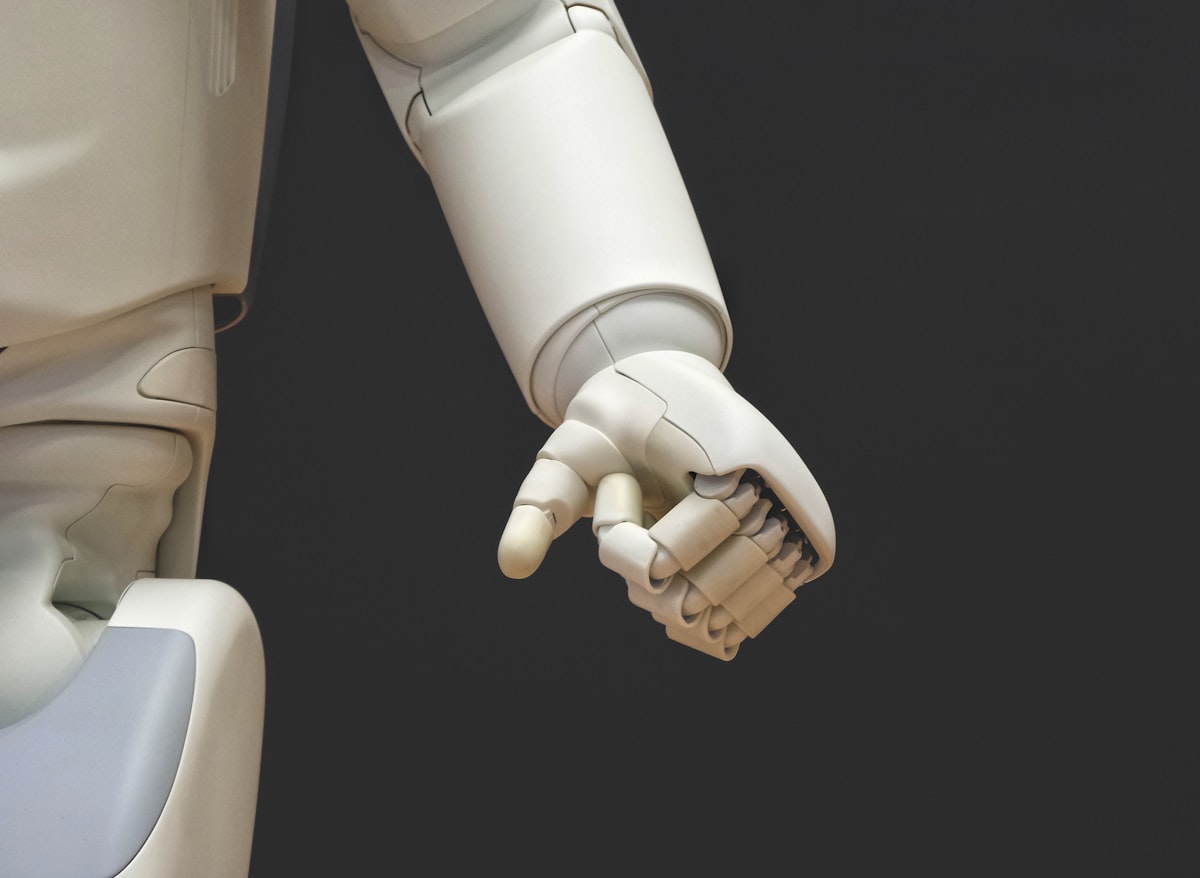
The first half of the humanoid-robot story is “can it actually do real work in a real factory.” Figure AI just shipped a credible answer. The Figure 02 wrapped an 11-month pilot at BMW’s Spartanburg plant having contributed to the production of over 30,000 BMW X3 vehicles, loaded more than 90,000 sheet-metal parts, and logged 1,250 operational hours across 10-hour shifts Monday through Friday. Sheet-fitting accuracy held above 99 percent at a 5mm tolerance.
That is the press-release version. The interesting version is what happened around the headline. Figure 02 weighs 70 kilograms, stands roughly 170cm, and was doing classic pick-and-place: lift sheet metal, put it in the welding fixture, repeat. Not a flashy demo, just the most boring possible factory job done at human pace for ten hours a day. Minimal hardware failures, no choreography, no teleoperator behind a curtain.
Then Figure retired it. Figure 03 was announced earlier this year and the 02 units are being put out to pasture. This is the part the industry will quietly study: not whether the robot worked, but what data the 1,250 hours of failures, near-misses, and weird edge cases generated, because that is what Figure 03 was designed around.
The second half of the humanoid story is “can you build them at a price that survives contact with a CFO.” Tesla Optimus crossed 10,000 units in March. A factory in Guangdong is reportedly assembling humanoid robots every 30 minutes. Boston Dynamics’ production electric Atlas is committed to Hyundai and DeepMind through 2026. The question stopped being whether humanoids will work in factories. It became which ones, and at what unit economics.