
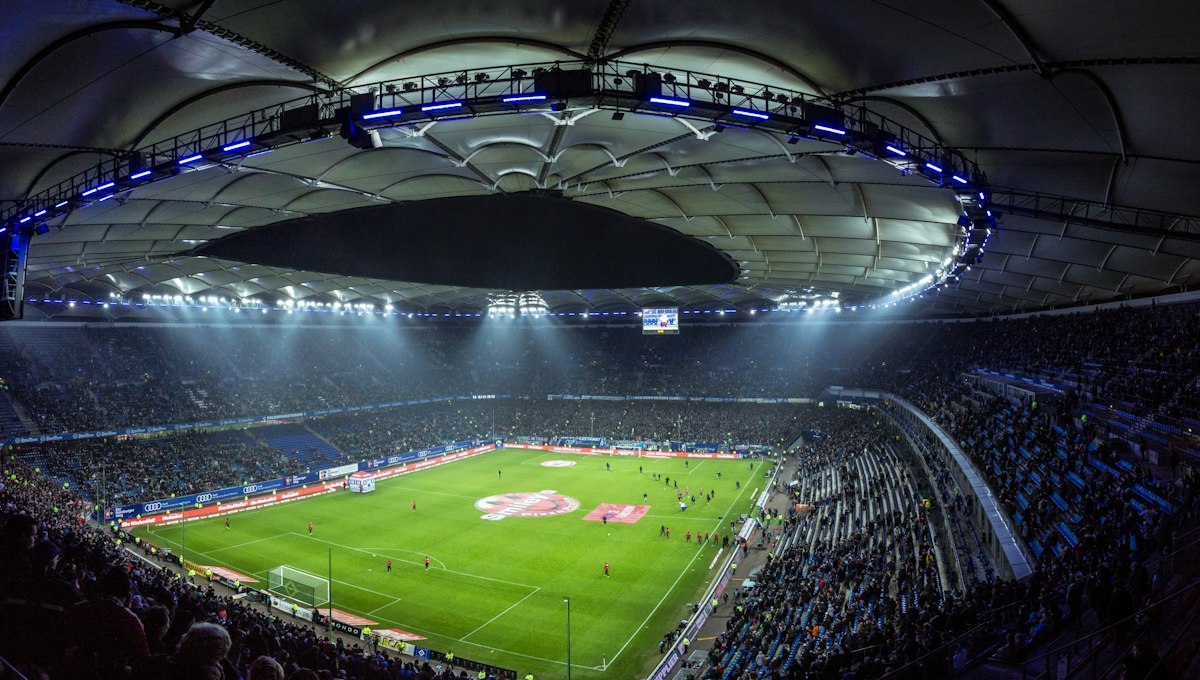
On Sunday July 5, during halftime of the FIFA World Cup Round of 16 match between Brazil and Norway at New York/New Jersey Stadium, a Boston Dynamics Atlas walked out of the player tunnel, crossed to the midfield circle in front of about 80,000 people, and performed sequential goal celebrations in the style of Erling Haaland, Harry Kane, Matheus Cunha, and Son Heung-min. It then turned to the referee, handed over the match ball, and walked off. That is a sentence that would have gotten someone fired for hallucinating in 2023.
The framing Hyundai wanted, which it got, is that this was the first robotics-powered halftime show in FIFA history. Hyundai has been a FIFA sponsor for 27 years and is the official robotics partner of the World Cup. Boston Dynamics is inside Hyundai. The activation was five years in the making. If you were writing a marketing case study on how to introduce a general-purpose humanoid to a mainstream audience without falling into the uncanny valley, doing Haaland’s arms-out celebration is a genuinely clever answer. Humor lowers the stakes. A robot doing a soccer bit is not a robot taking your job.
The technical story underneath is the story worth writing. The fifth-generation Atlas that debuted a few weeks ago is a mass-production design, roughly an order of magnitude fewer parts than the previous generation, with 56 degrees of freedom and a self-swapping battery. Hyundai has publicly targeted 30,000 units a year. Google DeepMind’s Gemini Robotics foundation model is powering the control stack, which means Atlas is not being programmed with hand-written motion trajectories. It is being trained, closer to how large language models learn than how a factory arm gets choreographed. That fact is what let the World Cup demo happen at all. Prewritten motion would not survive a five-degree pitch, unpredictable lighting, and the wind coming off the Meadowlands.
The reason a live natural-grass humanoid demo is a big deal is that natural grass, wind, and 80,000 people are exactly the failure modes that used to embarrass humanoid programs on YouTube. Boston Dynamics running the sequence to completion, on live global television, without so much as a stumble that made a blooper reel, is a real demonstration of where the platform actually is. The bit itself is fun. The stability envelope is the news. Somewhere in a Google DeepMind office, an engineer watched the referee take the ball and quietly closed a laptop.